
Lydia Boyle and TREco: A Second Life for Research Technology
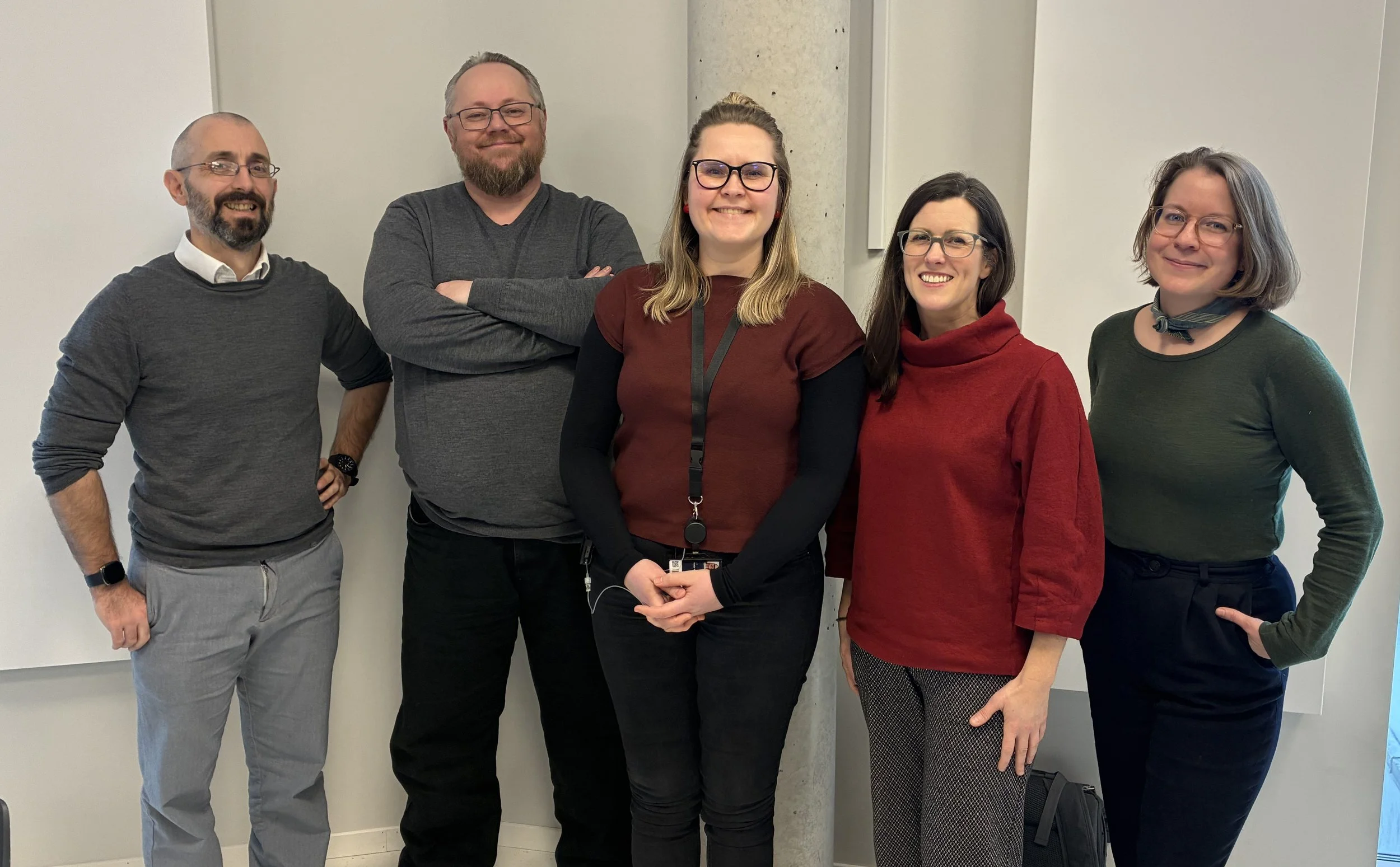
From left: Brice Marty, Morten Storevik, Maarja Vislapuu, Lydia Boyle, and Petra Hribovšek. The TREco team also includes Rayanne Garcia, who is not pictured. Together they are developing the Technology Reuse Ecosystem.
Research environments are full of advanced technology. Sensors, instruments, and specialized equipment are constantly purchased to support new projects. But what happens when the project ends?
For Lydia Boyle, a PhD candidate at the University of Bergen, that question became the starting point for a new idea.
– We kept seeing valuable technologies and equipment being bought for short-term use, quietly shelved, and forgotten, she says.
– The result is unnecessary costs, unused equipment, and growing electronic waste.
Together with an interdisciplinary team of researchers and developers, she is now developing TREco – Technology Reuse Ecosystem, a platform designed to make research equipment visible, shareable, and reusable across institutions.
From observation to idea
The idea for TREco grew directly out of Lydia’s doctoral work.
Originally trained as a physical therapist, she is now pursuing a PhD at the University of Bergen. During her research, she noticed how often specialized equipment was purchased for a specific project and then left unused once the work was completed.
– We realized this wasn’t just a series of isolated inefficiencies. It was a systemic gap in how research infrastructure is managed, she says.
In 2025, Lydia received UiB Idé funding to explore whether a solution could be developed. What started as an observation quickly grew into a collaborative project.
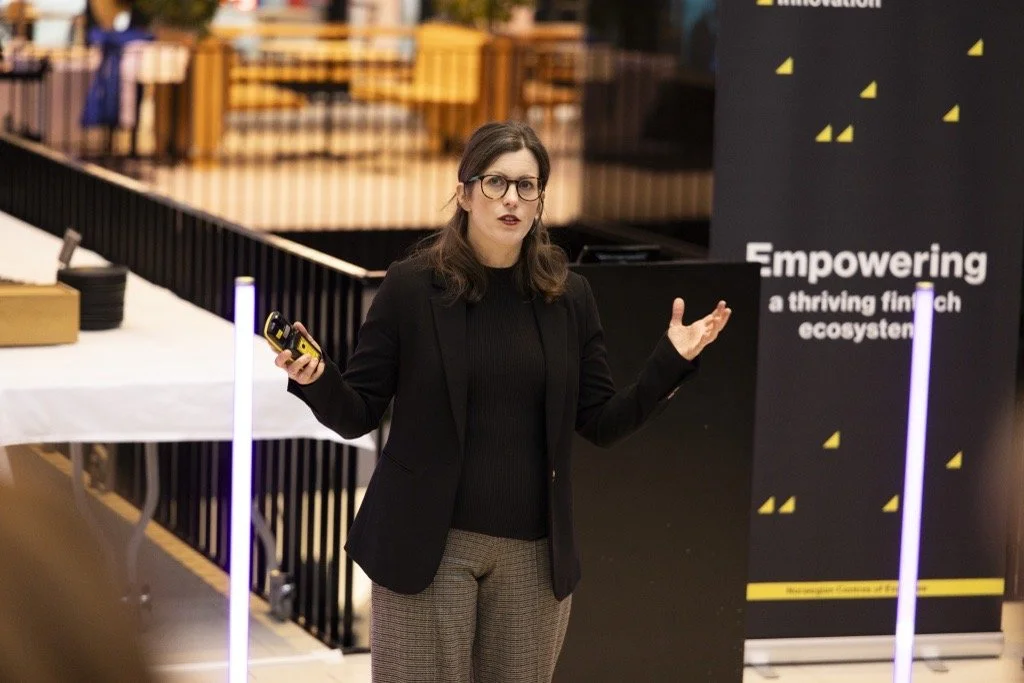
Lydia Boyle pitching TREco – Technology Reuse Ecosystem during a project presentation.
Today, TREco brings together expertise from several institutions in Bergen.
Maarja Vislapuu, associate professor at VID, contributes experience from research and healthcare systems and has been leading stakeholder engagement for the project. Brice Marty, a postdoctoral researcher at UiB with a background in neuroscience and engineering, brings extensive international academic networks and project supervision experience.
The team also includes backend developer Morten Storevik, who contributes to the technical development of the platform, Rayanne Garcia, who has been conducting market research and interviews with researchers, and Petra Hribovšek, a postdoctoral researcher at UiB working in deep-sea microbial ecology and sustainable research practices.
An overlooked problem in research
Across universities and research institutions, large amounts of equipment are purchased every year. Much of it is expensive, specialized, and used only for limited periods of time.
– Researchers spend enormous amounts of time and resources sourcing technologies that may only be used briefly, Lydia explains.
Often, the same equipment already exists somewhere nearby, but researchers simply do not know about it.
– When people aren’t aware that the instruments they need already exist in a neighboring lab or department, they may overspend, she says.
– Sometimes samples are even sent abroad for analysis when the technology actually exists locally.
The consequences are significant: unused assets, unnecessary spending, and avoidable environmental impact.
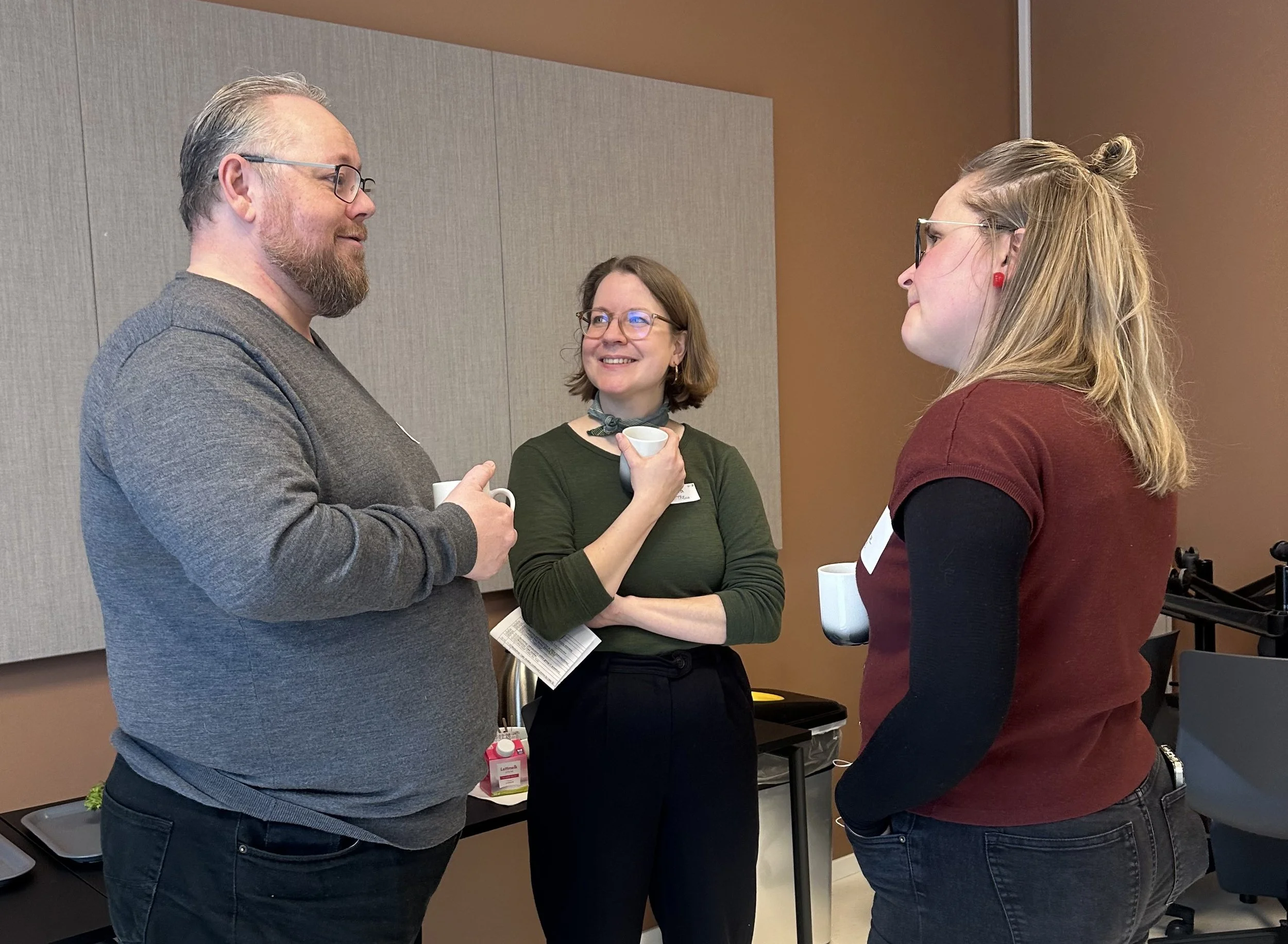
Morten Storevik, Petra Hribovšek, and Maarja Vislapuu in discussion during a TREco stakeholder workshop. Photo: Lydia Boyle.
Building a platform for reuse
TREco aims to address this challenge through a digital platform designed specifically for research environments.
– We are creating a platform that makes it easy to share, track, and exchange used technology and analytical equipment both within and between institutions, Lydia says.
The platform will include research tools such as sensors, laboratory instruments, and surplus lab supplies. These resources could be bought, sold, rented, or donated depending on the needs of the users.
The vision is to create an integrated system that combines several functions in one place.
– Our goal is to deliver an all-in-one platform for used research technology. This includes inventory management, a shared marketplace, and a directory of expertise, she explains.
By making equipment visible and accessible across departments and institutions, the team hopes to improve resource efficiency while reducing electronic waste.
Why the team joined TILT
For the TREco team, joining the TILT Research Entrepreneurship program represented an opportunity to move the project beyond the research stage.
– We see real potential for the platform to create meaningful impact. TILT helps us turn that potential into something concrete and achievable.
The program also offers something researchers rarely get within traditional academic paths: the chance to step outside their usual roles.
– It gives us the opportunity to gain new perspectives and develop entrepreneurial skills through structure, mentorship, and shared learning, Lydia explains.
The logo of TREco – Technology Reuse Ecosystem, a platform designed to extend the lifecycle of research technologies.
Toward more sustainable research
Looking ahead, the team hopes TREco can help research institutions use their resources more efficiently and sustainably.
– We want to empower users to make smarter use of technologies that already exist, Lydia says.
Extending the lifecycle of research equipment could significantly reduce both costs and environmental impact.
– Our aim is to reduce the collective carbon footprint of research environments while supporting better collaboration between groups and institutions.
Ultimately, the team hopes the platform can help shift how research infrastructure is perceived.
– Equipment is often tied to individual projects or departments. We want to break down that silo thinking and encourage more sharing and interaction across research environments.
What excites the team right now
At the moment, the team is working closely with potential users to shape the platform.
– As researchers ourselves, we value ongoing dialogue with the people who would use this system, Lydia says.
TREco is currently hosting stakeholder workshops with researchers, lab managers, administrators, and other actors to gather insights and feedback.
– What excites us most is seeing how engaged people are in the idea, she says. There is real momentum building around improving how research resources are managed.
The team is now planning a phase two pilot project with local stakeholders starting in autumn 2026, alongside further development of the technical platform.
– It is exciting to see the project growing. And to watch new collaborations and ideas forming around it, Lydia says.