
Pankaj Kumar Sinha: Building Riti to Make Local Life Easier to Join
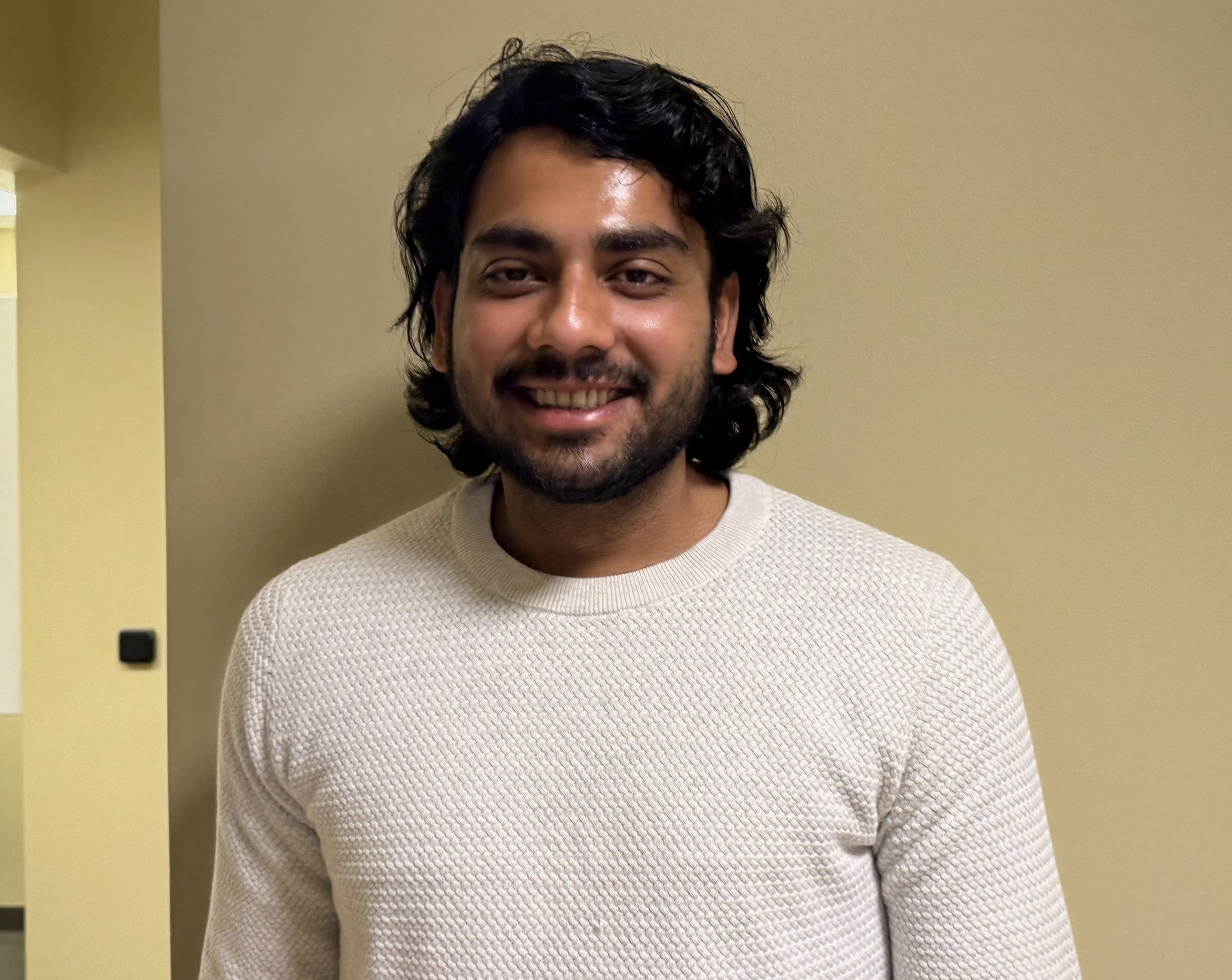
Pankaj Kumar Sinha is exploring how better platform design can make local life easier to join. Photo: VIS/Martine Turkevyč Tangenes
When Pankaj Kumar Sinha joined the TILT Researcher program, he did not arrive with a finished plan or a polished pitch. He arrived with a question and a strong curiosity for how platforms shape everyday life.
– I started out with a vague idea when I joined the program in September. But through the discussions and different pivots, I finally realized what I wanted to build.
That idea has now taken shape as Riti, a platform designed to make it easier for local spaces, event hosts, and attendees to find each other.
The goal is simple, but ambitious: to help more social and cultural activity happen.
From systems and math to real world behavior
Pankaj very recently finished his PhD at the Norwegian School of Economics (hooray 🎉). Before moving to Norway, he studied mathematics and computer science at the Indian Institute of Technology in Kharagpur. That technical background still shapes how he approaches problems today.
– My background is in optimization, systems design, and decision making under uncertainty, he explains.
But his interests have always stretched beyond equations and models.
– Beyond academia, I’ve been deeply interested in how platforms shape real world behavior, Pankaj says.
– Especially how incentives, trust, and fairness interact in local communities.
That intersection between systems and society is exactly where Riti lives.
Why is it so hard to make things happen locally?
At the core of Riti is a problem Pankaj kept noticing again and again.
– Riti addresses a coordination problem between three groups that rarely get designed for together. Space owners, event hosts, and attendees, he says.
Each group has something to offer, but they rarely meet in the same system. Space owners have rooms that stand empty. Hosts have ideas, but face too much friction to organize something small. Attendees are interested but often do not know what is happening nearby.
– Today, space owners struggle to utilize their spaces efficiently, Pankaj explains.
– Hosts face high friction when trying to organize small events, and attendees lack visibility into meaningful local activities.
The issue is not a lack of interest or creativity. It is fragmentation.
– Because these groups are spread across different tools and informal networks, a lot of potential social and cultural activity simply never happens.
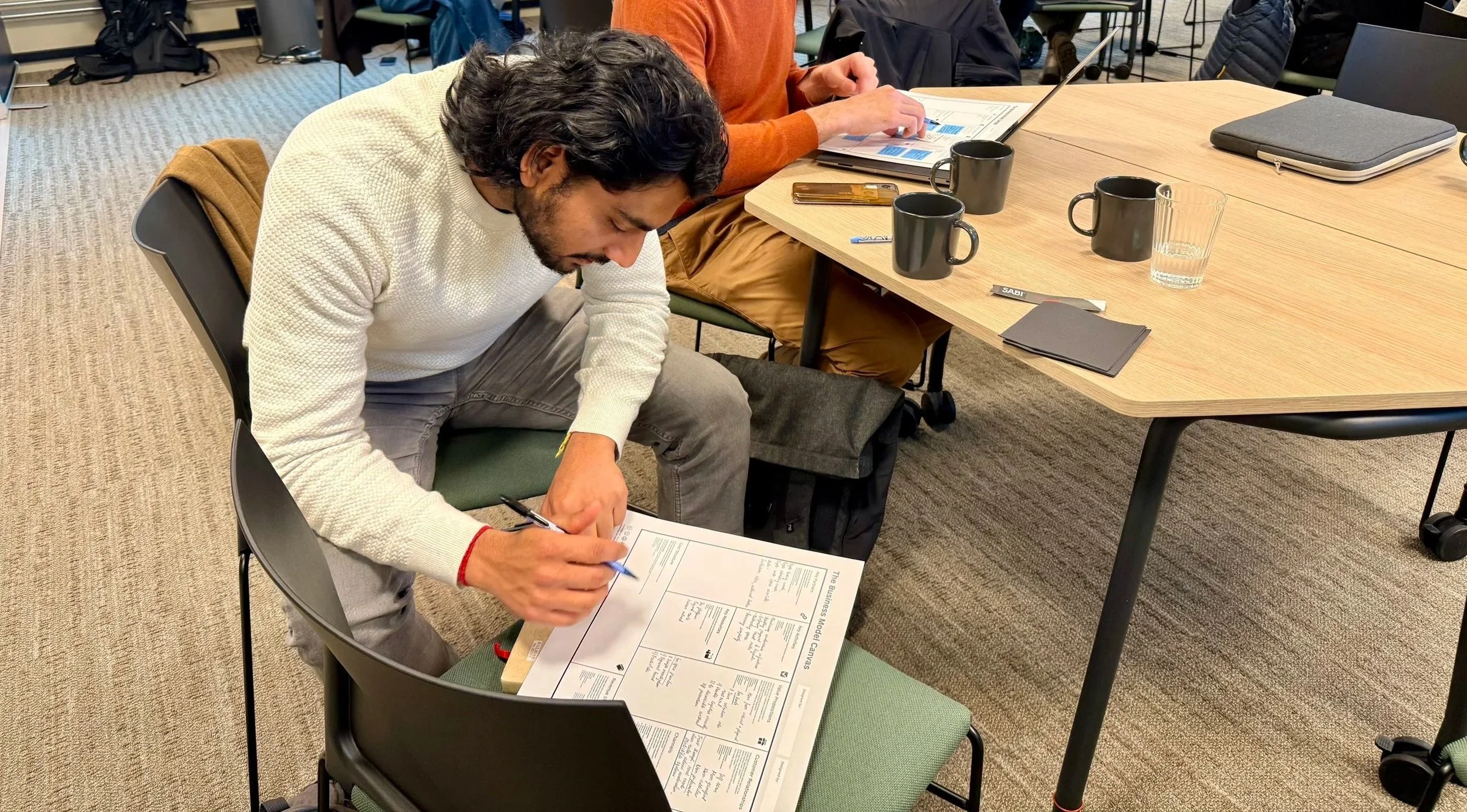
Hands-on work during a TILT Researcher workshop in January. Photo: VIS/Martine Turkevyč Tangenes
Designing one platform for three perspectives
Rather than solving the problem for just one group, Pankaj wanted to design Riti for everyone involved.
– Riti is designed as a shared platform that aligns incentives across all three roles, he says.
The idea is to lower the threshold for participation, no matter who you are.
– Space owners can make their spaces available in a flexible and low effort way, hosts can easily create and run events, and attendees can discover and participate in activities that would otherwise remain invisible.
For him, balance is key.
– Rather than optimizing for one side of the market, the system is built to balance the needs of all three.
Finding clarity through TILT
Joining TILT was not about accelerating something that was already finished. It was about figuring things out along the way.
– I joined TILT to get some help and advice along the process of building a product, Pankaj says.
He started the program with an open question, not a fixed solution. Over time, through conversations and testing different directions, things began to click. He also highlights the openness of the program and the value of having people to think out loud with.
– The openness has been very useful along this process, Pankaj adds.
More activity, less friction
Pankaj does not see Riti as just another event platform. For him, it is about making offline life easier to access.
– I hope Riti can help create more active, connected local ecosystems. Where spaces are used more intelligently, hosts can experiment with new ideas, and people can participate more easily in offline life.
Whether the platform grows large or stays focused is not the main concern.
– The goal is to enable more human activity with less friction. And make people go out in this digital world!
What excites him right now
At this stage, what excites Pankaj most is seeing how people respond.
– It’s fun to see how differently the three groups respond, and how quickly the design improves once all perspectives are considered together, he says.
That is where things start to move. When different needs are seen side by side, the system becomes clearer, smarter, and more alive.
And suddenly, more things can happen.