
Marianna Betti and Harald Moen: Growing Fresh Food at Sea
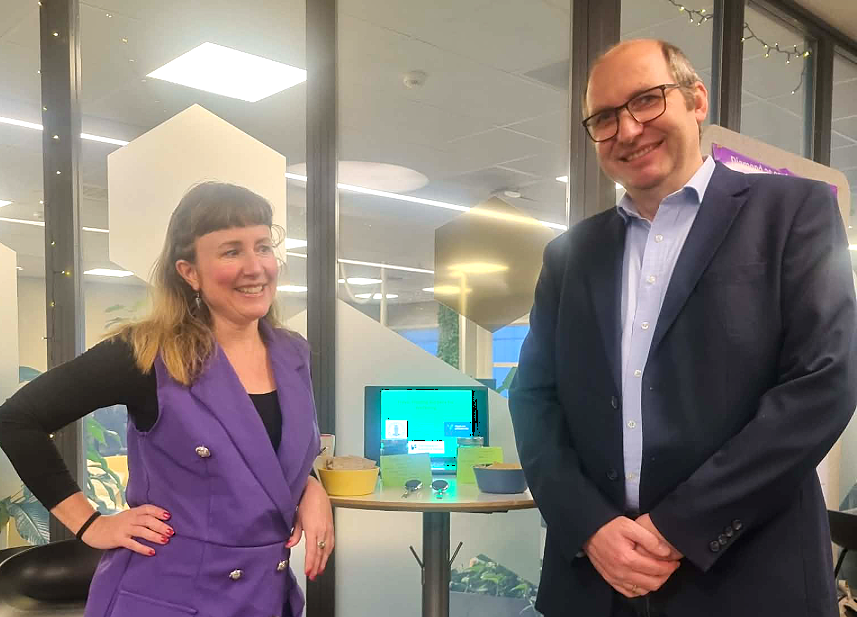
Marianna Betti and Harald Moen are developing Project Frøya, a floating garden designed for life onboard ships. Photo: Private
When social anthropologist Marianna Betti began her fieldwork onboard LNG carriers, she did not set out to develop a technological solution. She set out to understand everyday life at sea.
What she discovered was a small, recurring problem that turned out to be anything but small.
– Only a few days after departure, crews often run out of fresh vegetables and living plants, she says.
– For weeks at a time, seafarers have no access to fresh greens.
Together with Harald Moen, Senior Electrical Engineer at Western Norway University of Applied Sciences (HVL), this observation has now grown into Project Frøya. A floating garden designed to bring fresh food and living plants back into life onboard large ships.
From life at sea to a shared project
Marianna Betti is a social anthropologist from Italy, currently based in Bergen, where she works at the University of Bergen. Her research focuses on life and labor at sea, particularly in highly technological environments. Harald brings a different but complementary perspective.
– Our collaboration brings together ethnographic insight into everyday life onboard ships with engineering expertise in maritime systems and testing, Marianna explains.
The project builds on close conversations with seafarers and hands on observations from real working conditions at sea. Food, she says, is never just food.
– Food plays a central role in social life, morale, and health onboard ships. The absence of fresh produce affects both physical wellbeing and mental health, especially during long periods of confinement.
In an industry struggling with recruitment, retention, and crew wellbeing, she sees this as a structural challenge rather than a minor inconvenience.
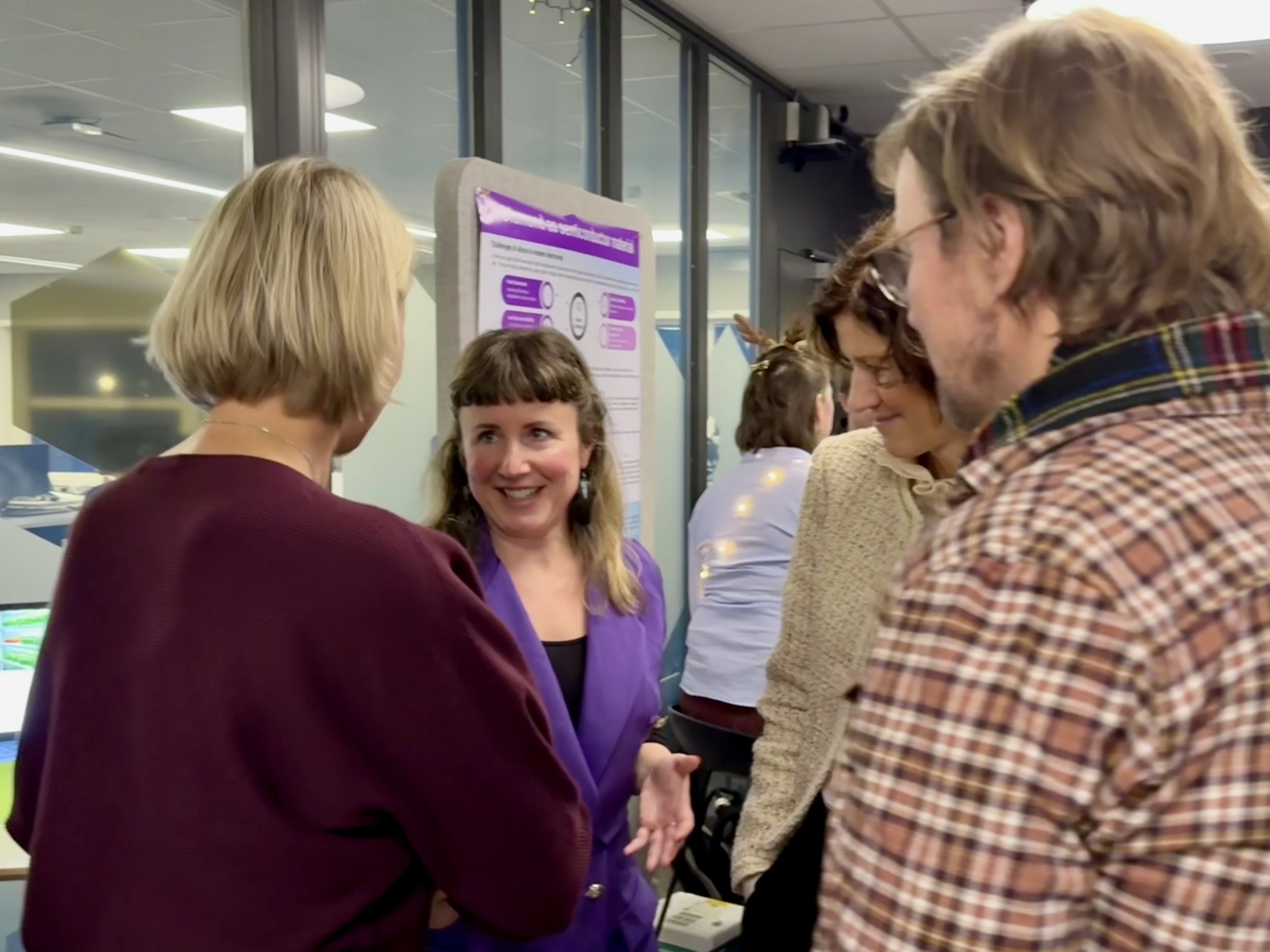
At the TILT Xmas pitch, Marianna Betti shares Project Frøya with attendees stopping by her stand. Photo: VIS/Martine Turkevyč Tangenes
A floating garden inside the ship
Project Frøya approaches the challenge in a very concrete way.
– We are developing a floating garden, a modular automated hydroponic shelf system designed to function inside large merchant vessels, Marianna says.
The system is built to withstand vibrations, movement, and limited space, all defining features of ship environments.
– Ships are already self-sufficient systems that produce water, heat, energy, and light, she explains.
– We build on this logic by using existing onboard resources to grow fresh greens where people live and work.
Together with HVL, the team has built and tested a first prototype in a maritime laboratory. The system is now being monitored through automated testing designed to simulate shipboard conditions, with plant growth at the center of attention.
Hands-on work with the Business Model Canvas during a TILT Researcher workshop. Video: VIS/Martine Turkevyč Tangenes
Why TILT mattered
For Marianna, joining the TILT Researcher program marked an important shift.
– My background is deeply research based. While I have strong empirical insights and a working prototype, I want to learn how to translate this knowledge into a commercializable and sustainable real-world solution, she says.
TILT has given the project a new framework without removing its core.
– TILT is teaching us the backbone of entrepreneurship. How to think about value propositions, partnerships, testing, and scaling, she says.
– And how to do this without losing the human centered core of the project.
She describes the program as a bridge between academic research and meaningful innovation.
Care, sustainability, and everyday life
Looking ahead, Marianna and Harald hope Project Frøya can move from prototype to real-world testing.
– We hope the project can lead to onboard testing, long term partnerships with shipping companies, and eventually a scalable solution for improving life and work at sea, she says.
The idea may also extend beyond shipping.
– The concept could be relevant for other remote or confined environments, such as offshore platforms, research vessels, and polar stations.
At its core, the project challenges narrow ideas of sustainability.
– Sustainability is not only about emissions and technology. It is also about care, wellbeing, and everyday life.
Where the project is now
What excites the team most right now is seeing the idea take physical form.
– Watching plants grow in a prototype designed for a ship environment and knowing that this grew directly out of conversations with seafarers, is incredibly motivating, Marianna says.
Project Frøya currently sits at a rare intersection.
– Research, ethnographical observations, hands on engineering, and the early stages of entrepreneurship, she says.
– That combination is where we believe meaningful innovation happens.
Frøya derives from ethnographic observations related to the RCN-funded project “Automation Shift in the Maritime Sector of the Oil and Gas Industry” (ASMOG) led by Prof. Cecilie Vindal Ødegaard.