
Digital Cortisol: Making Stress Visible Through Data
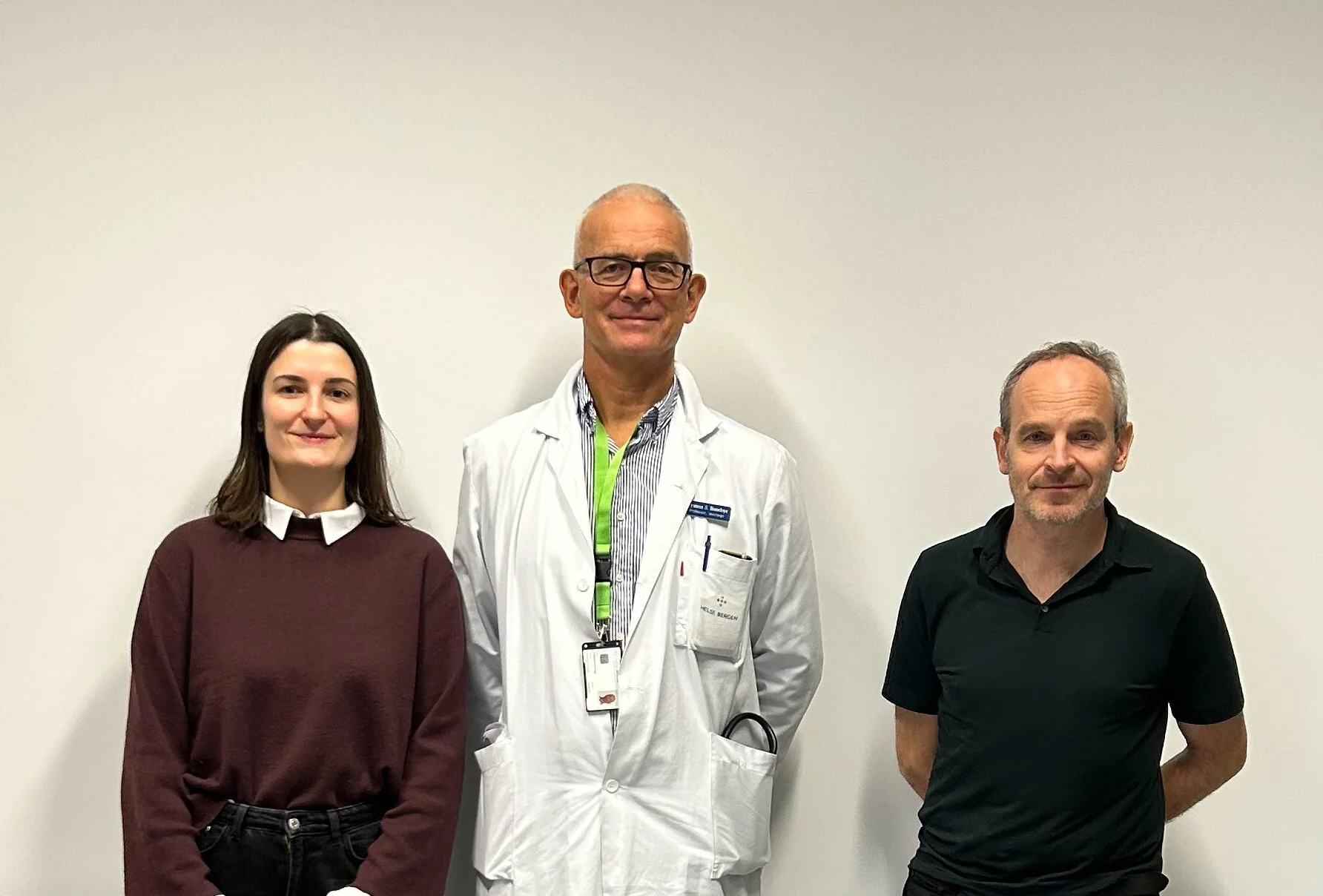
Lila Gravellier, Eystein Husebye and Helge Ræder are developing Digital Cortisol Monitoring, a project that uses wearable data to model how the stress hormone cortisol fluctuates throughout daily life.
We track our steps, our sleep, and our heart rate. But one of the body’s most important signals is still largely invisible.
For Lila Gravellier and her collaborators, that gap is the starting point for the Digital Cortisol Monitoring project.
– Digital health technology has made huge progress, but one key piece is still missing in this landscape: cortisol, she says.
Together with endocrinologists Eystein Husebye and Helge Ræder, she is working to develop new ways of understanding how this central hormone behaves in everyday life.
A hidden signal in the body
Cortisol plays a key role in how the body responds to stress, regulates metabolism, and recovers over time. But despite its importance, it remains difficult to measure in practice.
– Cortisol influences how we function, recover, and adapt. When its regulation goes off balance, the impact can extend to obesity, diabetes, and other long-term health issues, Lila explains.
The challenge is not that cortisol is unknown, but that it is hard to observe in real life.
– Current measurements are invasive and limited. We still cannot capture cortisol as it truly behaves in daily life, she says.
This means an important part of human physiology remains hidden, both for individuals and clinicians.
From wearable data to “digital cortisol”
The project approaches this challenge by combining physiology and data science.
– Our goal is to model stress physiology dynamics using data from common wearable devices such as smartwatches, Lila says.
Instead of measuring cortisol directly, the team works with signals that reflect how the body responds to stress.
– By combining physiological signals linked to the cortisol response, and using innovative modeling approaches, we aim to reconstruct a digital cortisol profile, she explains.
This profile could show how cortisol changes over time, and help identify patterns of imbalance or recovery.
The idea is simple, but powerful: to turn something invisible into something that can be understood and acted upon.
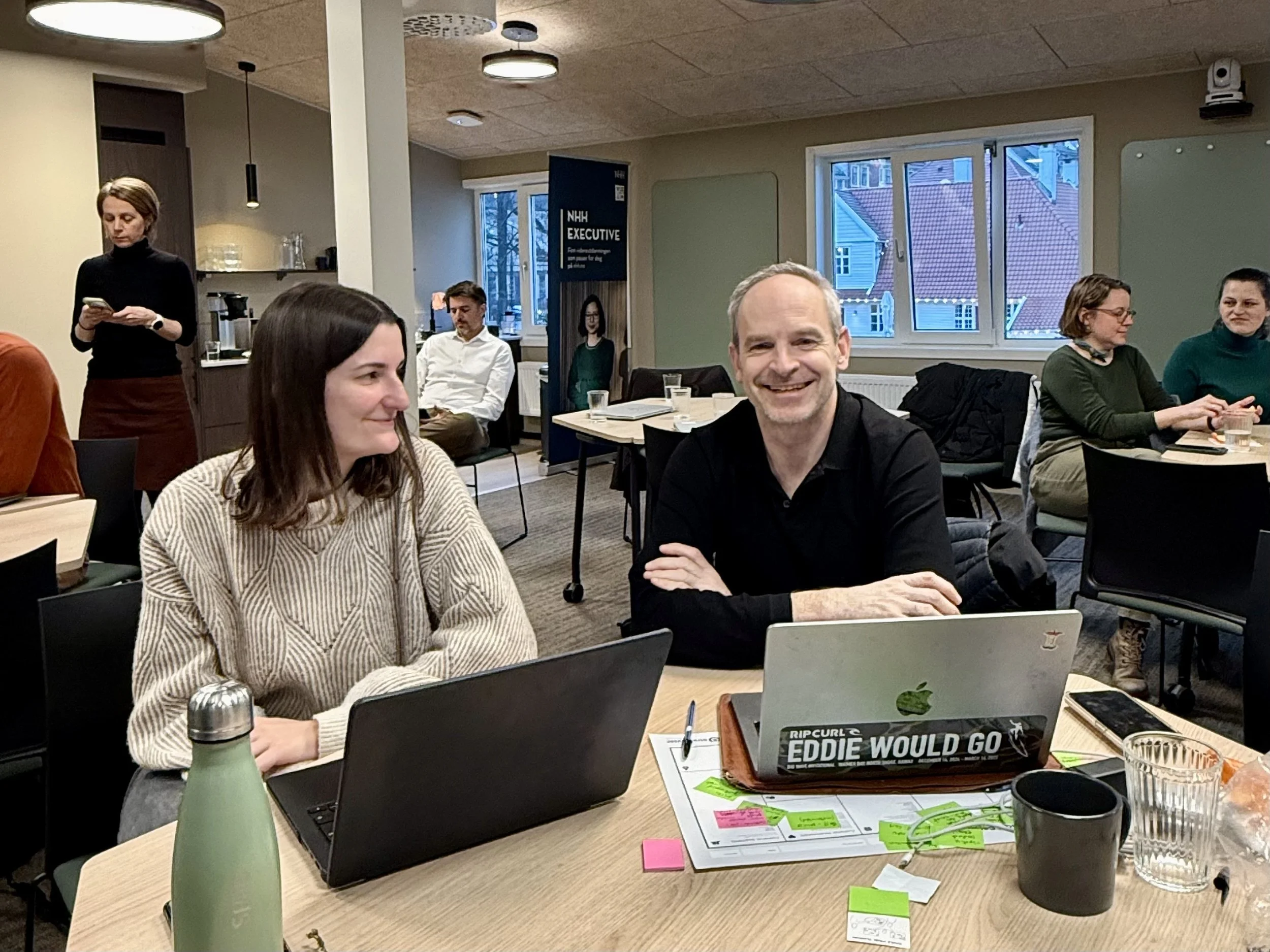
Lila Gravellier and Helge Ræder working with the Business Model Canvas during a TILT Researcher workshop, exploring how to develop their research into real-world applications.
A multidisciplinary team
The project brings together expertise from several fields.
– We are a multidisciplinary team working at the intersection of digital health, endocrinology, and innovation, Lila says.
She contributes a background in computer science and wearable device data, while Helge Ræder and Eystein Husebye bring clinical and research expertise in endocrinology.
– Together, we combine technical, clinical, and innovation-driven perspectives to build Digital Cortisol, she explains.
From research to real-world use
For the team, joining the TILT Research Entrepreneurship program is about moving beyond theory.
– As researchers, we see TILT as a valuable opportunity to explore how a strong academic idea can be translated into something concrete and useful for people, Lila says.
The program provides a framework for thinking about users, applications, and implementation.
– We want to better understand real-world needs and what is required to move from scientific proof of concept toward innovation and possible commercialization.
Understanding the body in everyday life
Looking ahead, the team hopes the project can lead to tools that help people better understand their own health.
– We hope this project can lead to a new tool that helps people reflect on how lifestyle and stress affect their health, Lila says.
– And support healthier habits over time.
In a clinical setting, the impact could be just as important.
– In the longer term, we hope it can offer a more realistic and continuous view of patient physiology in daily life, she explains.
– Helping both patients and clinicians make more informed decisions.
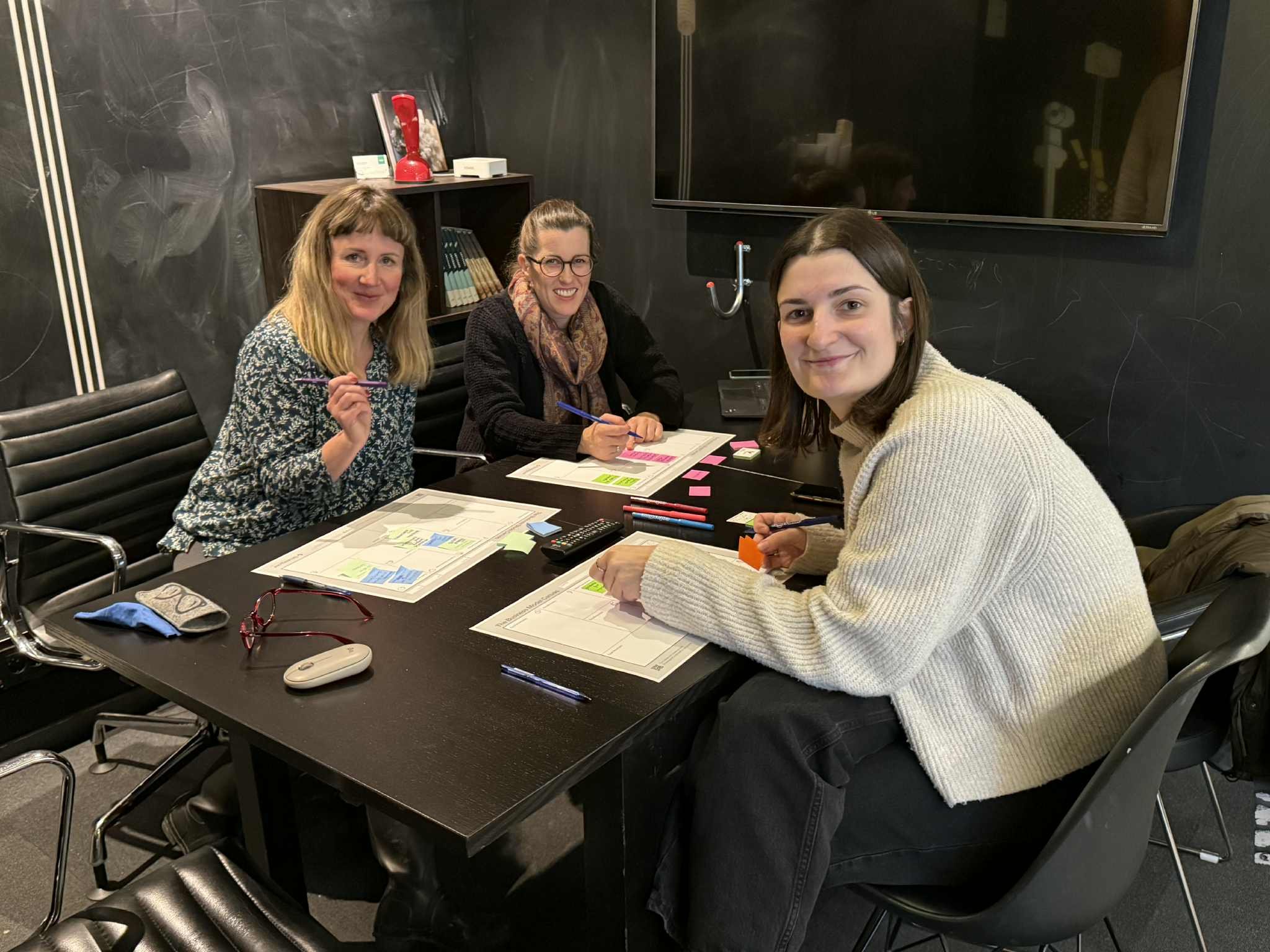
Lila Gravellier together with Marianna Betti (Frøya) and Lydia Boyle (TREco). Through the TILT Researcher program, participants collaborate closely over time and become part of a shared innovation ecosystem in Bergen.
Making the invisible visible
What excites the team most right now is the potential of the idea itself.
– What excites us most is the possibility of making something invisible visible, Lila says.
Understanding stress physiology has always required snapshots in controlled settings. Continuous insight has been much harder to achieve.
– The idea that wearable data could reveal part of this hidden physiology is both scientifically fascinating and full of innovation potential.
And if successful, the project could open an entirely new way of understanding how the body responds to everyday life.
The Digital Cortisol Monitoring project is also being developed as a TTO project here at VIS, supporting the translation of research into a potential real-world solution.