
Valeriya Lyssenko and the DiaZERO Team: Preventing Diabetes Complications Earlier
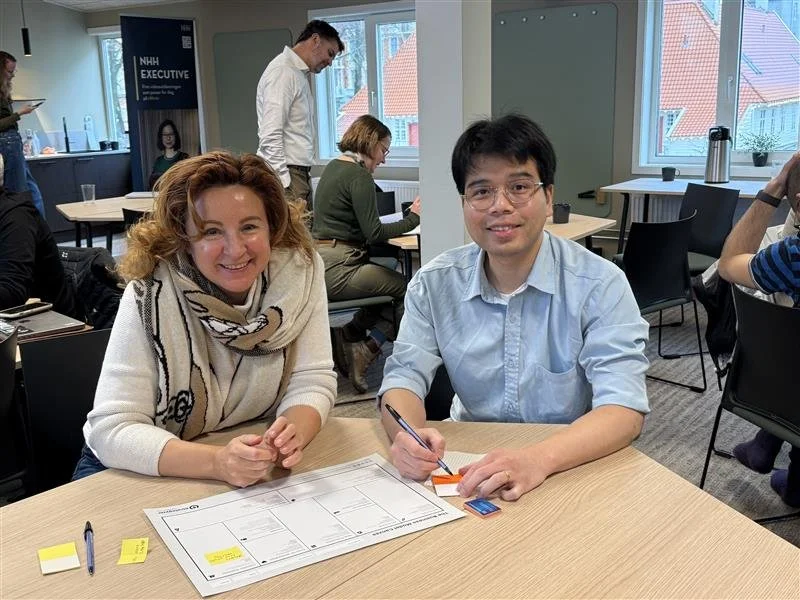
Valeriya Lyssenko and Tung X. Trinh developing the DiaZERO project during a TILT workshop.
Diabetes is often described as a chronic condition that can be managed over time. But for many patients, the most serious complications begin long before they realize something is wrong.
For medical scientist Valeriya Lyssenko, that challenge is at the heart of the DiaZERO project.
– Patients with diabetes face a number of serious complications. These include blindness caused by retinopathy, dialysis as a consequence of kidney dysfunction, myocardial infarction, stroke, and pain in the lower extremities that affects both walking and sleep, she says.
Together with colleague Tung X. Trinh, she is working on new ways to detect and prevent these complications long before they become irreversible.
A problem that develops silently
One of the most difficult aspects of diabetes complications is that they often begin long before symptoms appear.
– These problems can often already be present at the preclinical stage, when they are still asymptomatic, Valeriya explains.
Over time, the underlying damage can gradually build up without patients noticing.
– These conditions can develop over several years while people are unaware that they are carrying them, she says.
– By the time they become visible, they may already have developed into devastating and irreversible diseases.
This long silent period creates both a challenge and an opportunity for medical research.
Looking for earlier solutions
The DiaZERO project focuses on exactly this window of opportunity.
– Our approach is to find early solutions that can help patients with diabetes prevent these devastating diseases, Valeriya says.
The team behind the project brings together expertise from several scientific fields.
– In the DiaZERO project we are medical scientists with backgrounds in endocrinology, molecular biology, bioinformatics, and chemistry, she explains.
By combining these perspectives, the researchers aim to better understand how complications develop and how they might be prevented earlier in the disease process.
From research insight to real-world impact
While the scientific foundation of the project is strong, the team also wants to explore how their research could lead to practical solutions for patients.
– We joined the TILT programme to strengthen our knowledge about the entrepreneurship expertise needed to achieve our goals, Valeriya says.
The TILT Research Entrepreneurship program gives researchers the opportunity to explore how ideas developed in academia can eventually become innovations with real-world impact.
– Successful project performance will help facilitate the development of medical technical innovations into a market-ready healthcare solution, she explains.
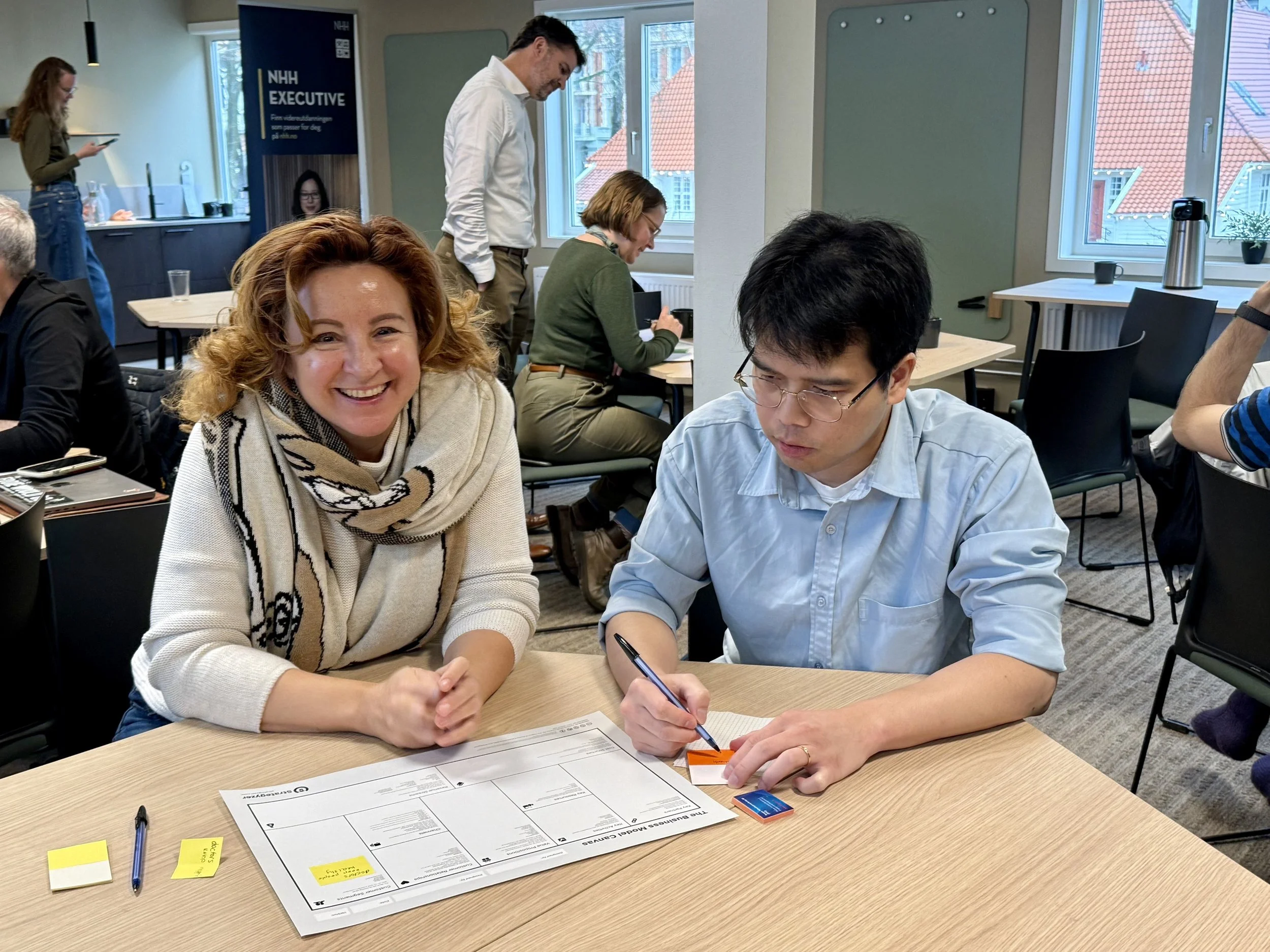
Valeriya Lyssenko and Tung X. Trinh working on the DiaZERO project during a TILT workshop, exploring how earlier detection could help prevent severe diabetes complications.
A shared motivation
For the DiaZERO team, the motivation is clear.
– What excites us most right now is the possibility of addressing these challenges and transforming people’s lives, Valeriya says.
Their goal is not only better understanding of the disease, but also better ways for patients to manage it.
– We hope to enable more individual disease management and help prevent the most devastating complications before they occur.
The DiaZERO project originates at the University of Bergen and in the Lyssenko Group, Valeriya’s research group focusing on diabetic complications. The project is also developed as a TTO project at VIS, and is currently supported by a Research Council of Norway Qualification grant.
Ultimately, the ambition is simple: to identify risks earlier and help people with diabetes avoid the most devastating complications before they begin.